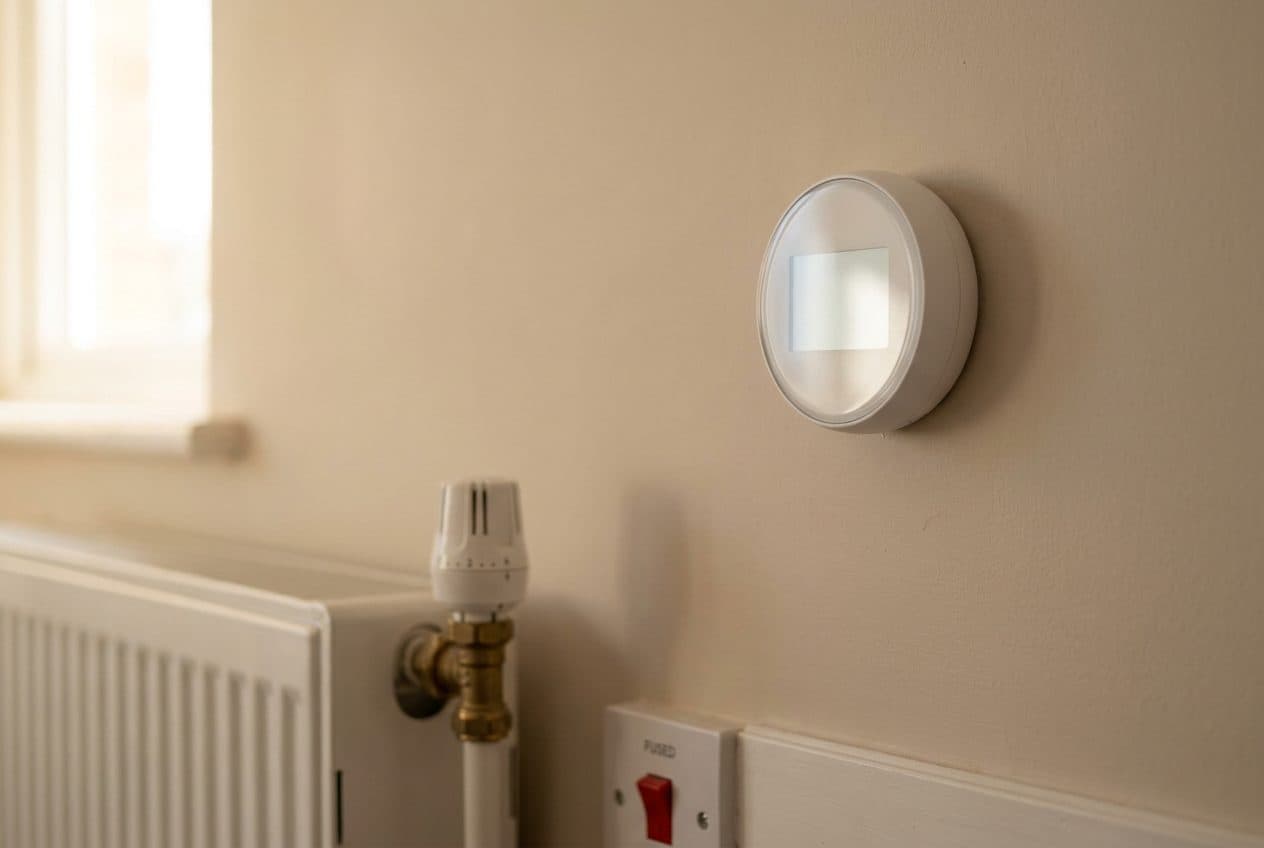
A wall thermostat and heating programmer in a rented flat, the controls an EPC credits

Energy · Launching · For landlords

Not yet taking bookings

EPCs for landlords.

An E is the floor today. A C is the proposed floor for the 2030s. Where your property sits, what the exemptions actually cover, and what to do with a D before the deadline does it for you.

Minimum today
E
Proposed 2030
C
Valid for
10 yrs
Planned price
£69

The Rules, Plainly

Three dates that matter.

Landlord EPC rules have moved three times in a decade and are about to move again. This is where they stand.

L.01

April 2018, then April 2020

New tenancies needed an E from April 2018. From April 2020 the E minimum applied to every existing private tenancy too, exemptions aside. A property below E cannot lawfully be let unless an exemption is registered.

L.02

The proposal: C by 2030

Government consulted in 2025 on raising the minimum to a C, new tenancies first and all tenancies by 2030. It is not yet law, but every serious forecast assumes some version of it lands. A D today is a rating with a deadline.

L.03

Ten years, from lodgement

A certificate lasts ten years. If yours was lodged in 2016 for a sale you have half forgotten, it expires this year, and a new tenancy cannot be marketed without a valid one on the register.

The Rating · Illustrative

A D with a C in reach.

The certificate names the band you are in and the band the listed measures would reach. Most D-rated houses with cavity walls get to a C on two or three of the cheaper measures, and the certificate ranks them for you.

Illustrative · Current rating D · Potential rating C

A
B
C
Potential
D
Current
E
F
G
Loft insulation topped up to 270mm
Room thermostat, programmer and TRVs
Low-energy lighting throughout

What the minimum actually requires

The Energy Efficiency (Private Rented Property) Regulations 2015 set E as the minimum rating for a privately rented home in England and Wales. Below that, the property is 'sub-standard' and cannot be let, or continue to be let, unless the landlord has either brought it up to E or registered a valid exemption.

The duty is not unlimited. A landlord has to make the improvements that would raise the rating, up to a cost cap of £3,500 including VAT per property. If the property is still below E after that spend, the 'all improvements made' exemption applies and has to be registered. Enforcement sits with the local authority, and penalties run up to £5,000 per property for a breach, on top of being unable to let it.

It applies to

  • Assured shorthold tenancies, assured tenancies and regulated tenancies of domestic property
  • Existing tenancies as well as new ones, since 1 April 2020
  • Any property that legally requires an EPC, which is nearly all of them

The exemptions, and how long they last

An exemption is not something you decide you have. It has to be registered on the PRS Exemptions Register, the EPC exemption register, with evidence, before you rely on it, and the register is public. Most last five years, after which the property is reassessed against whatever the rule is by then.

  • High cost: the cheapest recommended measure would cost more than the £3,500 cap on its own. Five years.
  • All improvements made: you have spent up to the cap and the property is still below E. Five years.
  • Wall insulation: written advice from a suitably qualified expert that cavity, external or internal wall insulation would damage the fabric or the building. Five years.
  • Third-party consent: a tenant, freeholder, lender or planning authority has refused consent for the works. Five years, or until consent is obtained.
  • Devaluation: an independent surveyor's report that the works would reduce the property's market value by more than five per cent. Five years.
  • New landlord: a temporary six months from the date you became the landlord in certain circumstances, such as inheritance, to give time to comply.

What to do with a D

A D is lawful today and probably not in five years. The certificate's recommendation list is the shopping list, already ranked by how many points each measure is worth, and the cheap end of it is where most D-rated houses get to a C: loft insulation topped up, a room thermostat and radiator valves, LED lighting, and cavity wall insulation where the walls have a cavity and it has never been filled.

Solid-walled Victorian terraces, which is most of Lincoln's older rental stock, are the hard case. Internal or external wall insulation is the measure that moves them and it is expensive and disruptive, which is exactly what the wall-insulation and high-cost exemptions exist for. Get the levers ranked before spending anything, and read how to improve an EPC rating for what each one is typically worth.

Before every new tenancy

The EPC is one of the documents a tenant has to be given at the start of a tenancy, and one of the things a local authority will ask for if a tenant complains about the property. Check the register by postcode before you market; it is free and takes a minute.

The checklist

  • A valid certificate on the national register, not expired, describing the house as it is now
  • A rating of E or better, or a registered exemption you can evidence
  • A copy given to the tenant before they sign, and proof you gave it
  • The check-in inventory booked for the same day the keys go over, so the record starts on day one

Not yet live. Nothing is assessed or lodged until it is.

An EPC can only be produced and lodged by an accredited Domestic Energy Assessor. We are building that arm and will not take a booking until the accreditation is on record. Register interest and you get one message on launch day and nothing else. If you need a certificate before then, any accredited assessor can lodge one; the inspection reports and check-ins and check-outs we already do are available today.

?For landlords · Questions

Asked & answered.

Yes, today. E is the minimum, so a D is lawful. The proposal to raise the minimum to C is not yet law, but it is the direction of travel, and a D is the rating most likely to be caught by it. The sensible move is to find out how far from a C you are and do the cheap measures now.

Make the recommended improvements up to the £3,500 cap. If it is still below E, register the 'all improvements made' exemption with the invoices as evidence. If the cheapest single measure would cost more than the cap on its own, the high-cost exemption applies instead. Either way, register it before you let.

No. Most last five years, the new-landlord one lasts six months, and none carry over to a new owner. When it expires, the property is reassessed against the rule in force at that point, which may be higher than E by then.

Not legally, if the existing one is still in date. But the register shows the old rating until a new assessment is lodged, and a tenant, agent or enforcement officer will see the old number. If you have done the works, a new certificate is how they count.

The certificate lists them and roughly what each is worth. If you want a price for the works, our parent company can quote, but the assessment is never conditional on it and we will say plainly if a measure is not worth doing.

Not yet. EPCs launch once our assessor accreditation is in place. Until then nothing is assessed, lodged or charged. Register interest and you get one message the day it goes live.

Register interest.

Tell us the property and its current rating if you know it. One message when EPCs go live.

Register Interest