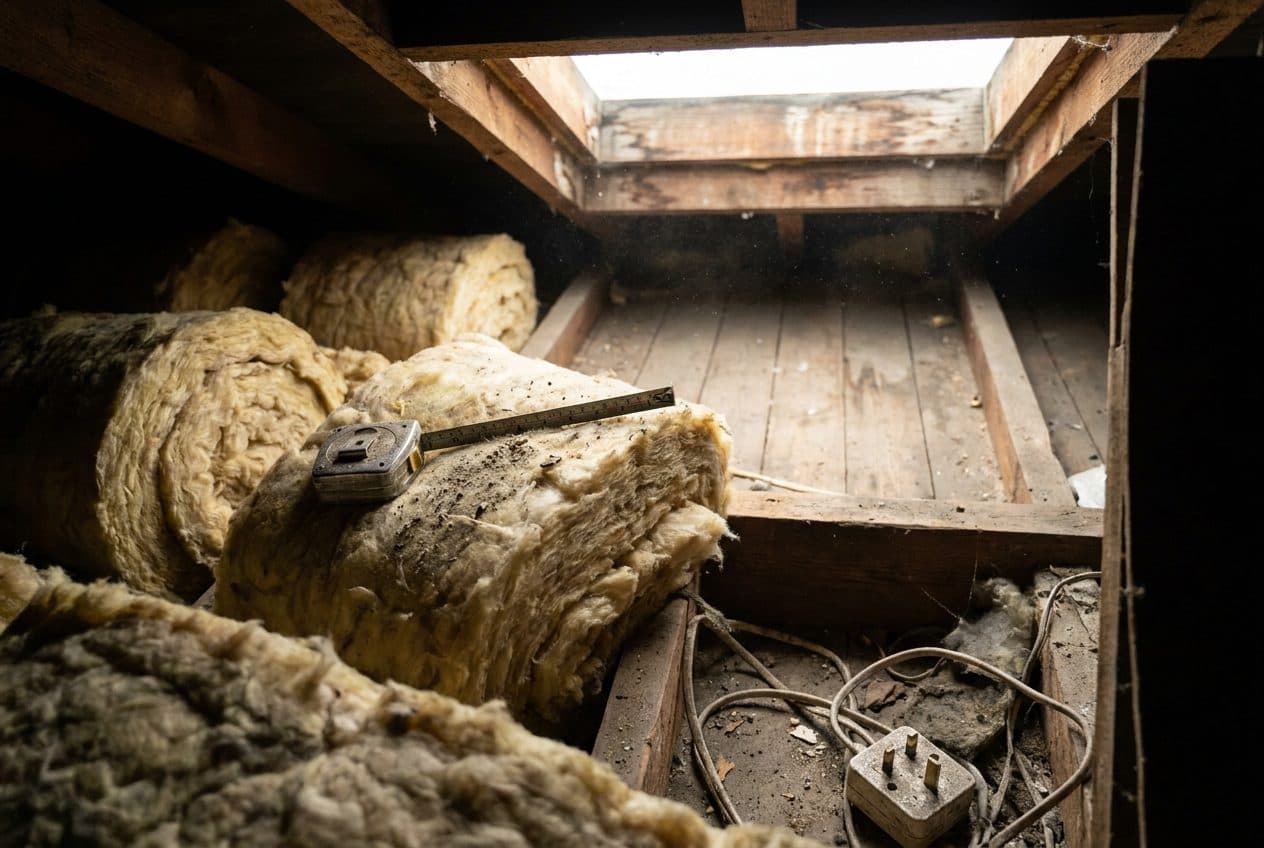
Measuring the depth of loft insulation between joists during an energy assessment

Energy · Launching · Improve your rating

Not yet taking bookings

Improve the rating.

The levers that move a band, ranked the way the certificate ranks them: by points gained per pound spent. Where a D becomes a C, and where an E needs the expensive lever.

Bands
A to G
Scale
1 to 100
C starts at
69
D starts at
55

How the Score Works

Points, not opinions.

An EPC is a score out of 100 on a standard method. Every band is a range of points, and every measure is worth a predictable number of them.

R.01

The scale

A is 92 or more. B is 81 to 91, C 69 to 80, D 55 to 68, E 39 to 54, F 21 to 38, G 1 to 20. A D at 66 is three points from a C. A D at 56 is thirteen. The certificate tells you which you are.

R.02

What the score weighs

Heating fuel and system efficiency carry the most weight, then the insulation of walls, roof and floor, then glazing, hot water, lighting and controls. Fuel matters: an oil-heated village house scores below a gas-heated one with the same fabric.

R.03

What it ignores

How you actually live in the house. The method assumes a standard occupancy and heating pattern, so a careful occupant in a poor house still gets a poor rating. It is a rating of the building, not of you.

The Rating · Illustrative

Two bands, three measures.

An illustrative 1930s semi with unfilled cavities, thin loft insulation and an old boiler. Three measures, none exotic, and the certificate would show a C.

Illustrative · 1930s semi · Current rating E · Potential rating C

A
B
C
Potential
D
E
Current
F
G
Cavity wall insulation
Loft insulation topped up to 270mm
Condensing boiler with room thermostat and TRVs

The cheap levers, in order

These cost tens or low hundreds of pounds, take a day or less, and between them are how most D-rated houses reach a C. Do them before the assessment, not after, because the assessor records what is there on the day.

  • LED lighting throughout: a point or two, for the price of the bulbs, and the assessment counts the proportion of fittings
  • Loft insulation topped up to 270mm: several points if it is thin or patchy, and among the best value measures there is
  • Heating controls: a room thermostat, a programmer and thermostatic radiator valves. A few points, and the certificate almost always lists it
  • Hot water cylinder insulation: a point or two if the jacket is thin, missing, or the cylinder is bare
  • Draught-proofing on doors and single-glazed windows: small, cheap, and it is counted

The middle levers

Four-figure sums, a few days, and the measures that move an E to a C in the right house.

  • Cavity wall insulation: a large gain on a 1930s to 1980s house with unfilled cavities, and often grant-funded. Get the cavity checked first; a damp or narrow cavity is not one to fill
  • A modern condensing boiler: a large gain if the existing one is old and non-condensing, because the heating system carries the most weight in the score
  • Double glazing: smaller than people expect. The certificate credits it, but the glazing is a minor share of heat loss compared to walls and roof
  • Suspended timber floor insulation: worthwhile on a Victorian house with a ventilated void, and easier than it sounds if the boards are already up

The expensive levers

Five figures, weeks of work, and the measures that exist for solid-walled and off-gas houses where the cheap ones run out.

  • Solid wall insulation, internal or external: the lever for Victorian terraces, and the disruptive, costly one. This is what the wall-insulation and high-cost exemptions are for, so get advice before committing
  • An air source heat pump: can move a band substantially, most of all in an off-gas house heated by oil or LPG, and the method's treatment of electric heating is being revised in its favour. Get the fabric right first
  • Solar PV: worth several points, more with a battery, and it counts on the current method regardless of how much you use

The Lincoln case, in one paragraph

The terraces of the West End, Monks Road and Sincil Bank are solid-walled brick and typically sit at D or E; the cheap levers get most to a C at the top of the D range, and the rest need the wall. The 1930s semis with cavities get to a C readily if the cavity is filled and the boiler is modern. The post-war estates are cavity-walled and usually already insulated, so they are C territory with controls and lighting. The villages off the gas grid are penalised by oil, which is a fuel-cost problem the fabric cannot fix, and where a heat pump earns its keep. See EPCs in Lincoln for the coverage.

After the works, lodge a new one

The register does not know you have done anything. The old rating stands until a new assessment is lodged, and a tenant, buyer or council officer sees the old number. Keep the invoices and certificates: a cavity insulation guarantee, a boiler installation record and an insulation receipt are the evidence an assessor needs for what they cannot see behind the plaster.

Not yet live. Nothing is assessed or lodged until it is.

An EPC can only be produced and lodged by an accredited Domestic Energy Assessor. We are building that arm and will not take a booking until the accreditation is on record. Register interest and you get one message on launch day and nothing else. If you need a certificate before then, any accredited assessor can lodge one; the inspection reports and check-ins and check-outs we already do are available today.

?Improve your rating · Questions

Asked & answered.

A C starts at 69. A D runs from 55 to 68, so anywhere from one point to fourteen. The certificate shows your current score as a number, not just a band, and the recommendations table shows the band each measure would reach.

Yes, but by less than most people expect. Windows are a small share of a house's heat loss compared to the walls and roof, and the method reflects that. If the budget is limited, loft insulation, controls and cavity insulation are worth more points per pound.

In an off-gas house heated by oil or LPG, usually yes: the fuel cost weighting is what drags those houses down, and a heat pump changes it. In a gas-heated house with an old boiler, a modern gas boiler gets most of the gain for a fraction of the cost. Either way, insulate first.

For anything the assessor cannot see, yes. Cavity insulation, underfloor insulation and the age and type of a boiler all need paperwork to be credited. Loft insulation and lighting can be seen and measured on the day.

The certificate ranks them, and the note we send with it says which three we would do and why. We do not sell the works, so the ranking is the ranking.

Not yet. EPCs launch once our assessor accreditation is in place. Register interest and you get one message the day it goes live.

Register interest.

Tell us the property and its current rating if you know it. One message when EPCs go live.

Register Interest