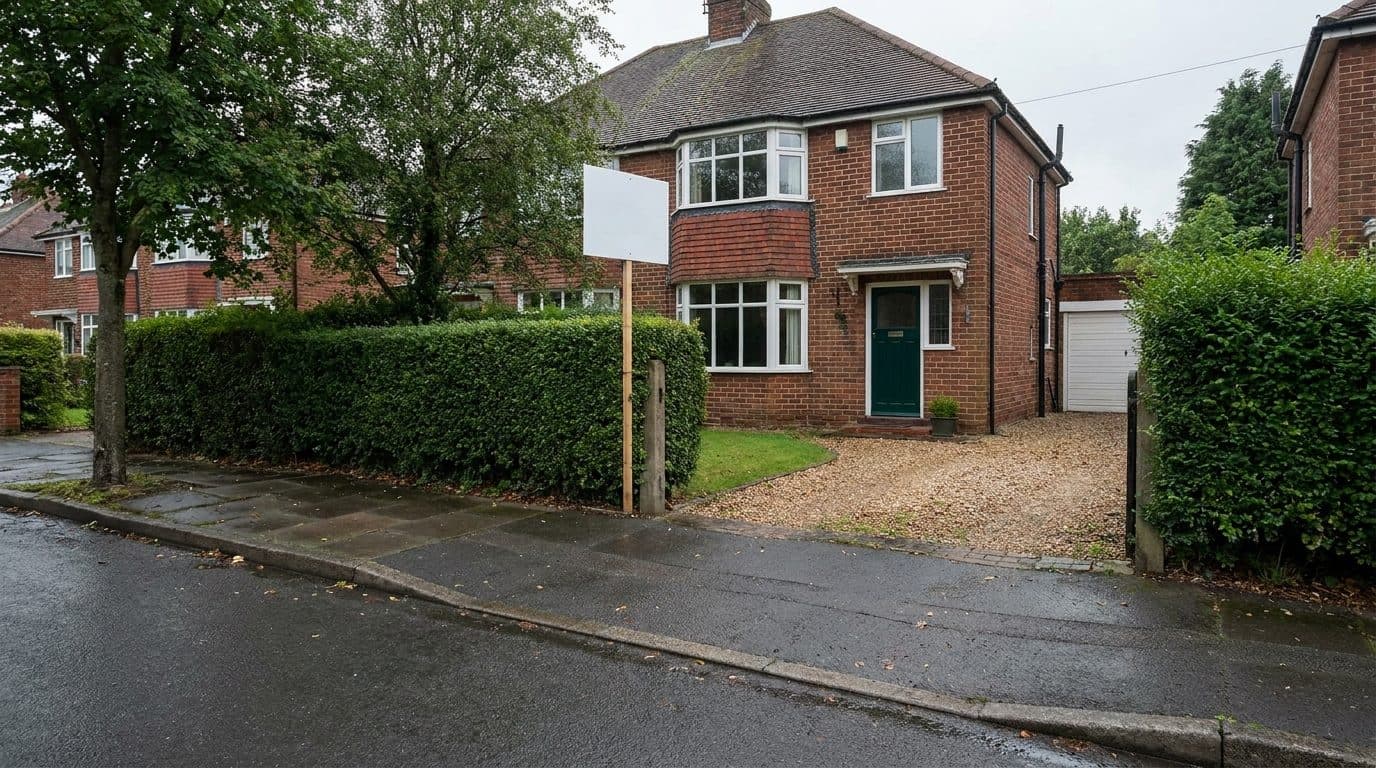
A couple standing on the pavement looking up at a terraced house they are viewing

Buyer Risk Report · Launching · Pre-purchase walk-round

Not yet taking bookings

Walk round with us first.

An hour at the property, with you, before you commit. What we would worry about now, what we would want looked at, and what is just an old house being an old house.

On site
About 1 hr
Verdict
3 tiers
Planned price
£100
Card by
Next day

When to Use It

Three moments it earns its fee.

Cheap enough to do on two houses. Useful enough to change which one you buy.

P.01

Before the offer

You like it, you are about to put a number on it, and you want someone who looks at property all week to walk it with you before you do.

P.02

After the survey

The Level 2 report has forty items and you cannot tell which three matter. We walk it with the report in hand and rank them, and we say which ones a specialist should see.

P.03

Before the renegotiation

The surveyor found something. You want to know whether it is a £400 job or a £14,000 job before you go back to the agent, and which kind of specialist can tell you for certain.

The Verdict Card · Three Tiers

Ranked, not listed.

A list of forty observations helps nobody. Every walk-round ends with three short tiers and a limits box, so you know what to do first and what we could not tell from looking.

Tier

Worry now

Something we would want a specialist to look at before exchange, or before it gets worse. Named, photographed, and matched to the kind of specialist who deals with it.

Tier

Worth a look later

Not a deal-breaker, but a cost or a job in the next few years. Ranked so you can budget rather than panic.

Tier

Not really

The things people worry about that we would not. Said plainly, so you can stop worrying about them.

The limits box · on every card

Not a RICS survey. No valuation. Nothing opened up, lifted or tested. Where we say “get this looked at”, we mean by the specialist named, and we cannot tell you how bad it is until they have.

What we look at

Everything that can be seen from where a viewer is allowed to stand, in a fixed order, so nothing is skipped because the agent was talking. Nothing is opened up, lifted or tested; where a thing needs testing we say so and name the trade.

  • The roof line and coverings from the ground and from any window that looks onto them: sag, slipped tiles, flashing, the chimney
  • Gutters, downpipes and ground levels: where the water goes, and whether it goes into the wall
  • External walls: cracking and whether it steps or runs, bulging, pointing, staining, the damp-proof course line and what has been built over it
  • Windows and doors: age, seals, misting, whether the frames are sound
  • Inside: ceilings and walls for staining and cracking, floors for slope and bounce, bathrooms and kitchens for seals and extraction
  • The boiler and its age, the consumer unit and its type, the meter positions, the stopcock
  • The loft, if there is a hatch and a ladder: timbers, felt, insulation, the water tank, daylight where there should be none
  • Outside: drains and their covers, boundaries, trees near the house, the neighbours' condition, and the street on a wet day if we can

What you get

The verdict card, by the next day. Three tiers, each item photographed and written in plain words: what we saw, why it matters, and who should look at it next. The worry-now tier names the kind of specialist for each item, a RICS surveyor, a structural engineer, a roofer, an electrician, a drainage contractor, or for damp and mould our sister company The Damp & Mould Man, and says how urgently. The limits box says what we could not tell from looking.

Then a call, after the specialists have reported, to help you read what they said. That part is included.

With a survey, or instead of one

With. A buyer risk report is not a survey and is not a substitute for one. If you are buying with a mortgage on a house older than the 1980s, a RICS Level 2 survey is the sensible minimum, and a Level 3 is worth the extra on a pre-1900, altered, extended or visibly cracked house. We will tell you which we would get, and if the answer is a Level 3 we will say so before you spend anything on us.

Where the walk-round fits is either side of the survey: before it, to decide whether to proceed at all and which level to instruct, and after it, to turn forty numbered paragraphs into three things to do. The what it is not page sets out the line in full.

How it works

Four steps, none of them complicated.

  • You arrange a second viewing with the agent, asking for 45 minutes to an hour. Most agents allow it; the ones that refuse are telling you something
  • We meet you there. We walk it together, in the fixed order, and you ask whatever you like as we go
  • The verdict card lands the next day, with the photographs and the who-next list
  • You instruct the specialists you need. When they have reported, we call to help you read it

Not yet live. No walk-rounds are sold until it is.

This is the one thing we do that is an opinion rather than a record, and an opinion needs the right professional cover behind it before it is worth your money. We will not sell a visit until that is in place. Register interest and you get one message on launch day. If you are buying now, a RICS Level 2 or Level 3 survey is the insured route, our guide to which level you need is free, and so is the viewing checklist.

?Pre-purchase walk-round · Questions

Asked & answered.

Not yet. This arm launches once the right professional cover is in place for giving advice, and until then we do not sell opinion visits. Register interest and you get one message when it goes live.

Almost always. A second viewing with a friend or adviser is normal, and an hour is a reasonable ask on a house you are about to offer on. If an agent refuses any second viewing, treat that as information.

No, and it is not a substitute for one. A RICS Level 2 or Level 3 survey is a formal, insured inspection to a published standard. A walk-round is a plain-spoken hour with someone who looks at property all week, ranked into three tiers. Most buyers of older houses should have both.

No. We do not value property and we do not comment on the price. We comment on what we can see and what we would do about it.

We say so, in the third tier. Some of the best value in a walk-round is being told which of the things you were worrying about are just an old house being an old house.

We point at it and put it in the right tier. Diagnosing it is a separate, instrumented visit that The Damp & Mould Man, part of the same company, does today without waiting for this arm to launch.

Register interest.

Tell us the property and where you are in the purchase. One message when walk-rounds go live.

Register Interest